My boyfriend and I are in sleeping bags on the tiled floor of a disused swimming pool, counting shooting stars and drinking Vinho do Alentejo from a plastic water bottle, which we filled up in a bar for two euros. The pool is in the overgrown garden of one of many picturesque ruins that litter the landscape around the Rota Vicentina, a long-distance hiking trail connecting Santiago do Cacem, two hours south of Lisbon, to Cabo de Sao Vicente, just outside Sagres.
It’s not the first time I’ve headed for Cabo de Sao Vicente in a mildly eccentric manner. Fifteen years ago, when I was twenty-six, I busked there from Nordkapp. Twenty thousand miles, from one end of Europe to the other. That was the adventure that inspired my first book Fearless.
I spent a month unwinding at Praia do Amado (beach of the beloved), near Carrapateira. There were several of us living there in vans, from all over Europe. I surfed so much I burned my eyes. I’d never experienced such an abundance of waves, sunshine and simplicity.
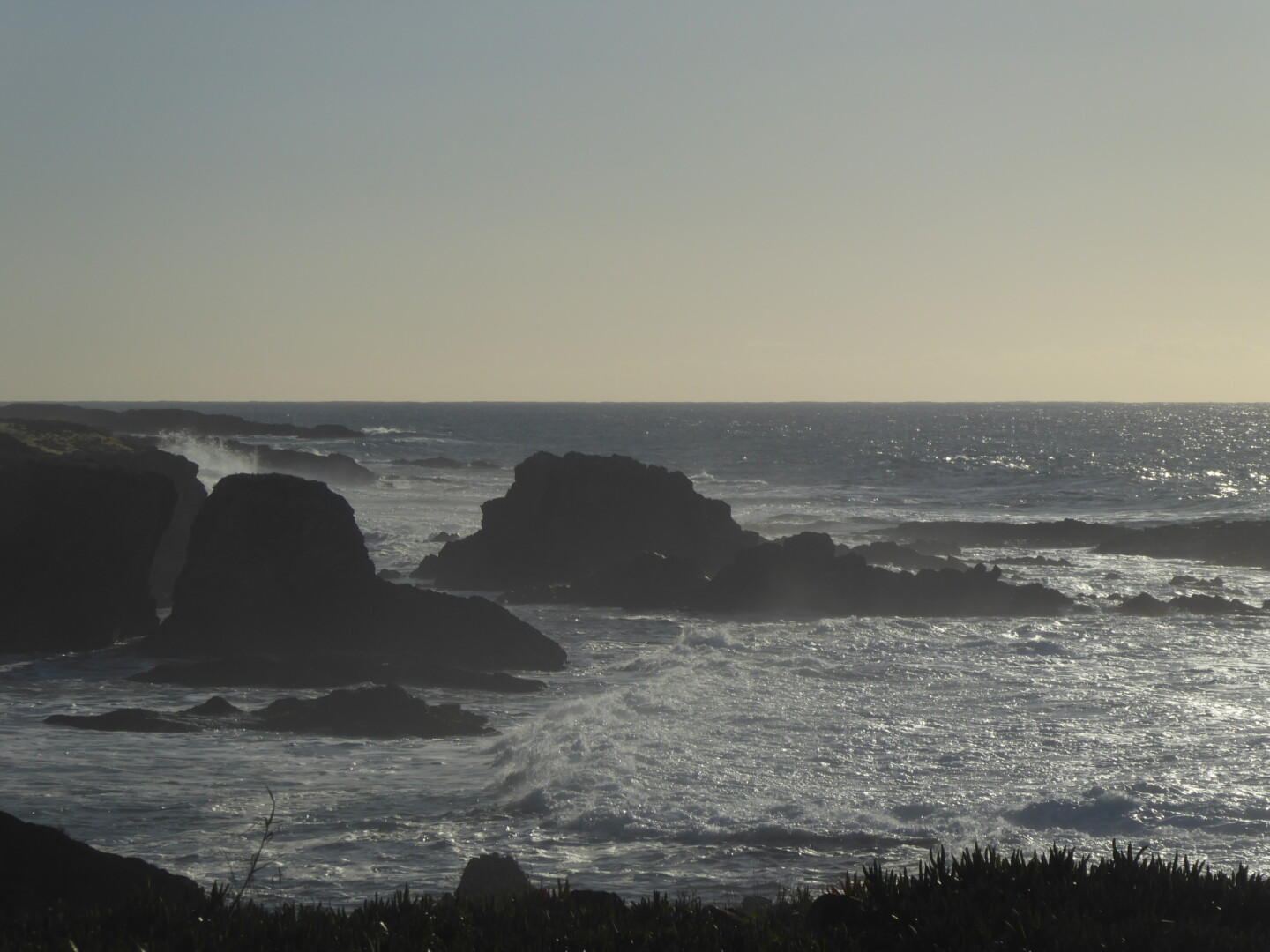
The Costa Vicentina runs for a hundred kilometres, from Porto Covo to Sagres. Protected by the Parque Natural do Sudoeste Alentejano e Costa Vicentina, it’s the last wild coast in southern Europe. Miles upon miles of raw, west-facing, sandy beaches, many of them only accessible via dirt track and 4X4.
The Rota Vicentina offers a choice: hug the rugged coast, or wander inland, through a rolling landscape of cork oaks, umbrella pines, and sun-soaked fields ringing with the sound of sheep and goats with bells around their necks.
The inland route brings us to the small town of Sao Luis, where we say goodbye. I’m to spend the winter finishing my third book, in a wooden cabin, in the garden of a friend’s house, on the outskirts of a village full of dogs and chickens.
Portugal enters lockdown. Borders close. Brexit fosters uncertainty. The Internet curdles my shrunken world. Unable to write, I seek comfort outside, in the open spaces of the Alentejo.
Less famous than the neighbouring Algarve, and less developed, Portugal’s largest region covers a third of the country, about ten thousand square miles, yet is home to just five hundred thousand people, roughly the population of Bristol.
I explore the surrounding fields, where majestic cork oaks seem to stand outside of time. The only evergreen oak, with a fire-resistant outer bark that’s used to make corks for wine bottles, the leaves of the sobreiro are constantly falling and renewing, giving a sense of spring and autumn happening simultaneously. Farmers have to plough around them, as they can only be cut down if they are dead or diseased – and even then only with the written permission of the authorities.
I ride through hectares of eucalyptus on my mountain bike, emerging on the shores of hidden lakes and snaking rivers. When storms permit, I paddle out into the cold Atlantic. I’m often the only person in the water.
I make a pilgrimage to Amado when lockdown ends, just after the Portuguese government announces a new law banning wild camping in vehicles. There are too many people trying to escape the constraints of civilisation, not enough toilets and rubbish bins. I get it, but I’m sad too. It strikes me that freedom is more complicated than it used to be. The growing need and desire for escape has further shrunk the space in which escape is possible. I can’t help wondering what happens when all the margins of refusal are scrubbed out.
There’s a wooden walkway where we parked our vans, and a gravel car park with defined edges. The reclaimed cliffs behind the new wooden fence are covered in flowers. I’m reminded that every ending contains a beginning.
Back in rural Alentejo, I find a subculture of young people reversing a decades-old trend of depopulation, choosing to live close to nature and grow their own vegetables, instead of pursuing the glittering rewards of Capitalism. There are conversations about water, the drastic consequences of intensive farming in polytunnels owned by foreign multinationals, the problems associated with eucalyptus.
I pick up the Rota Vicentina and follow it along high cliffs south of Praia do Malhao. I spot a pair of white storks nesting with their chicks on a narrow pillar of rock, ten meters offshore. It’s an impressive site for a nest, battered by the wind, surrounded by crashing waves.
I walk to Vilanova de Milfontes and sit with my notebook on the terrace of my favourite café. I recall those brave, pioneering storks, nurturing new life in the face of such wild and ever-changing emptiness. And I’m here again, staring at the sun, burning my eyes, making my sentences, word by word, and hurling them into the void.
Published in The National Geographic, August 2021
Leave a Reply